With content and technology now commoditized, survival turns on two harder things: the discipline to decide who not to serve, and the architecture to act on subscriber data rather than merely predict from it. This session at APOS 2026 read the AI shift less as a capability story than as an operating-model one. Ajit K. Thakur, Co-Founder and Director of aha, set the frame early by inverting it: product, tech, and content are converging toward parity, so the brands that prevail are the ones that build trust, relatability, and identity with consumers.
The advantage is no longer access to the stack. It is what an operator chooses to do with it.
That choice begins with subtraction. Sahil Dhar Hakim, Chief Business Officer at Evergent, located the failing businesses precisely: the ones without a point of view, which may hold all the content and the right tech stack yet never decide who they want to serve and, as important, who they do not. The winners make a deliberate trade-off and accept what to let go of, because a clear answer on the customer makes price points, tech strategy, and content strategy follow.
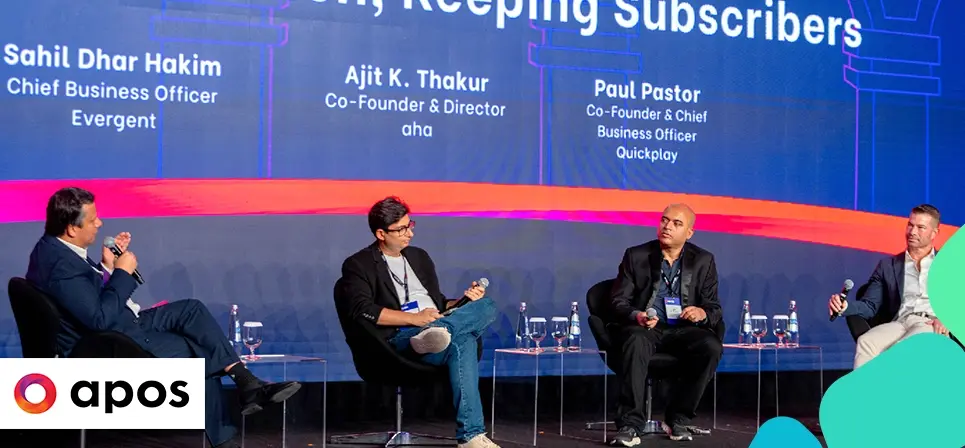
Thakur substantiated the point from the demand side, drawing on aha’s 2020 launch into a southern-India market already holding seven or eight platforms, including the global players. The research said India was a language-first market; by 2022 aha led Telugu on subscriber share, then extended into Tamil.
Session takeaways
- The streaming advantage has moved from owning the stack to choosing what not to do. With content, tech, and product converging toward parity, the operators that win make a deliberate tradeoff on who to serve and accept what to let go of.
- AI’s value gap sits between prediction and action. Evergent can predict churn at 94% accuracy two to three weeks out, but Hakim argued the return comes only when the system orchestrates the response autonomously rather than handing a human another forecast.
- Orchestration is the binding constraint, not features. Pastor framed most operators as maximizing one ecosystem with fragmented, feature-level decisions, where the leaders compound signals into a closed loop spanning broadcast, OTT, and the creator economy.
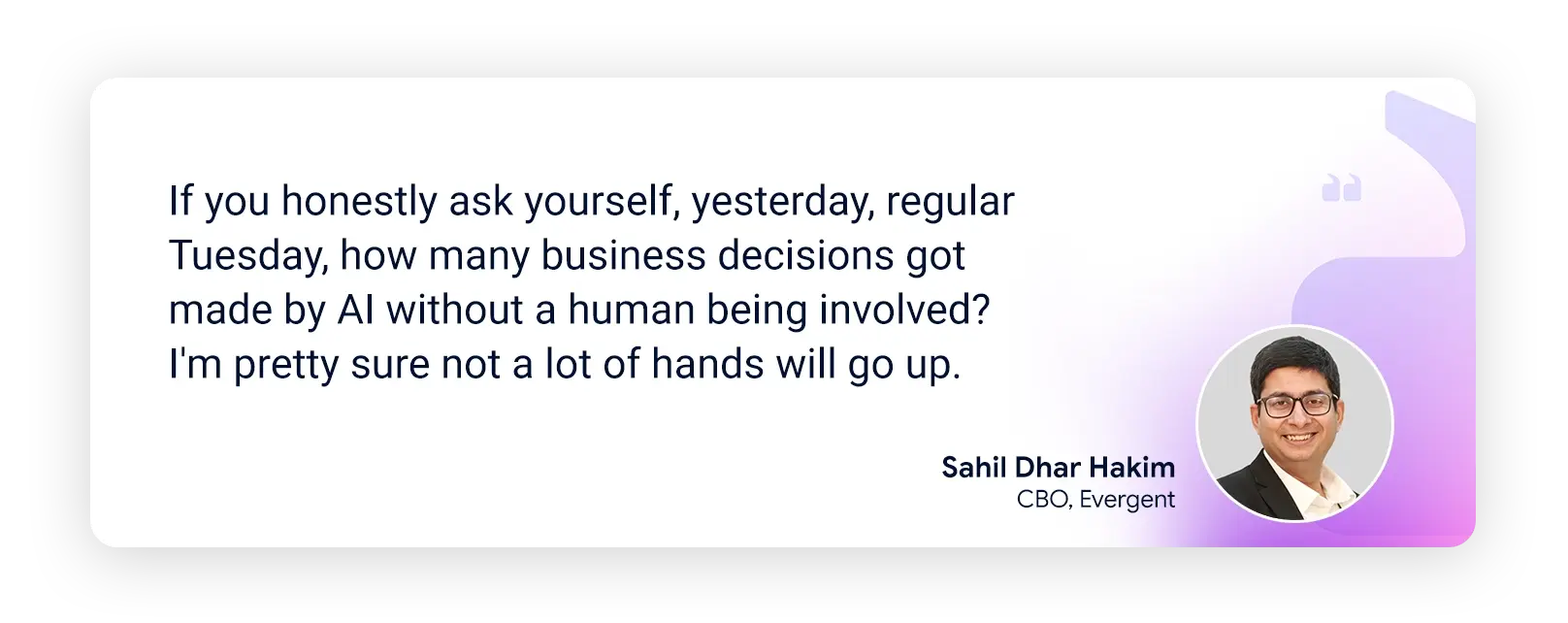
On AI, the panel drew a sharp line between prediction and action, and argued that almost all the value sits on the far side of it. Hakim was blunt that much of what circulates remains on the slide deck, asking how many business decisions were made yesterday by AI without a human in the loop.
Where it does land for Evergent is operational: models that predict with 94% accuracy whether a subscriber will churn in the next two to three weeks, payment recapture on failed transactions, and a digital customer-experience layer absorbing close to half of support interactions with no human intervention.
The next step is orchestration rather than prediction – Evergent’s recently launched agentic revenue-orchestration platform lets an operator move from a natural-language prompt to live SKUs, offers, and bundles, and runs agents for retention and churn. Prediction alone, in his read, leaves the subscriber journey untouched.
Paul Pastor, Co-Founder and Chief Business Officer of Quickplay, widened the lens to three ecosystems an operator must now span at once: the one-to-many broadcast base, direct-to-consumer OTT, and the creator economy. The binding constraint he named is orchestration, not features. Most operators are still maximizing for a single ecosystem and making twelve-month decisions that fail over three years, while the leaders treat fragmented signals as inputs that compound into a closed loop telling the system where to publish, what to surface, and how to extend a subscriber’s value.
His counsel cut against the instinct to bet on a single model: choose the operating system, the orchestration layer that survives the next leapfrog in models, rather than the model itself. Thakur extended the same logic into the library, where aha’s AI work flagged that 80% of its catalog goes unwatched – dormant inventory that can be cut into short-form and resurfaced. Whether that re-engagement rebuilds the shared, family viewing that streaming fragmented is the open bet he is rooting for.
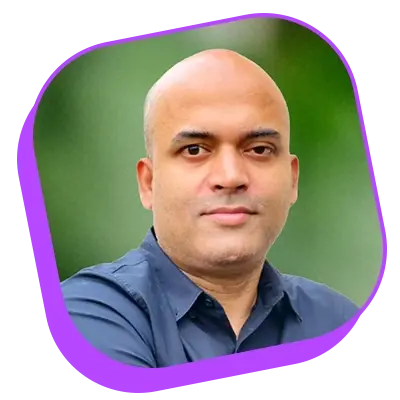
Ajit K. Thakur
Co-Founder & Director, aha
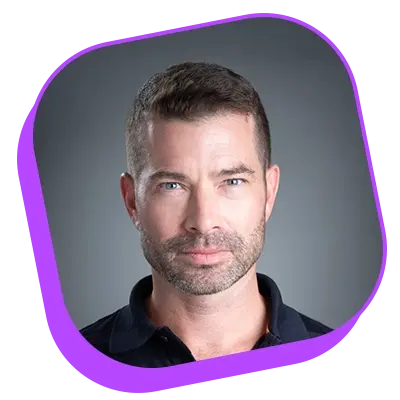
Paul Pastor
Co-Founder & Chief Business Officer, Quickplay
Sahil Dhar Hakim
Chief Business Officer, Evergent