The 2026 FIFA World Cup reached audiences across more than 220 territories, yet no two markets chose the same way to monetize it.
- In the United States, Fox placed the English-language tournament behind a $19.99-per-month streaming subscription.
- In Brazil, creator-led platform CazeTV streamed all 104 matches free on YouTube.
- In Germany, Deutsche Telekom made the tournament available on MagentaTV while sub-licensing selected matches to public broadcasters ARD and ZDF for free-to-air audiences.
FIFA rarely discloses territory-level fees. The figures below are the ones publicly reported by trusted trade and financial press; every other market is intentionally omitted rather than estimated.
| Market / scope | Reported value | Source |
|---|---|---|
| FIFA 2026 media rights (total) | > US$3.8bn | Finance Football, via HITC / Yahoo Sports (Jun 2026) |
| United States — English (Fox) | ~ US$485m | New York Times / SportsPro (2026); 2015 multi-tournament extension |
| United States — Spanish (Telemundo) | ~ US$465–600m | Estimates vary: HITC / Yahoo (~$465m); The Current (~$600m) |
| China (CMG / CCTV) | ~ US$60m | SportsPro / UCFB (2026); below FIFA’s initial expectations |
| India (Zee, value attributed to 2026) | ~ US$25m | Finance Football / Bloomberg, via Yahoo Sports (Jun 2026) |
| Regional aggregates | NA >$1bn · Asia+Oceania >$700m · S. America ~$360m · Africa ~$200m | Finance Football, via Yahoo Sports (Jun 2026) |
Three markets. Three completely different commercial strategies. And that wasn’t the exception – it was the pattern.
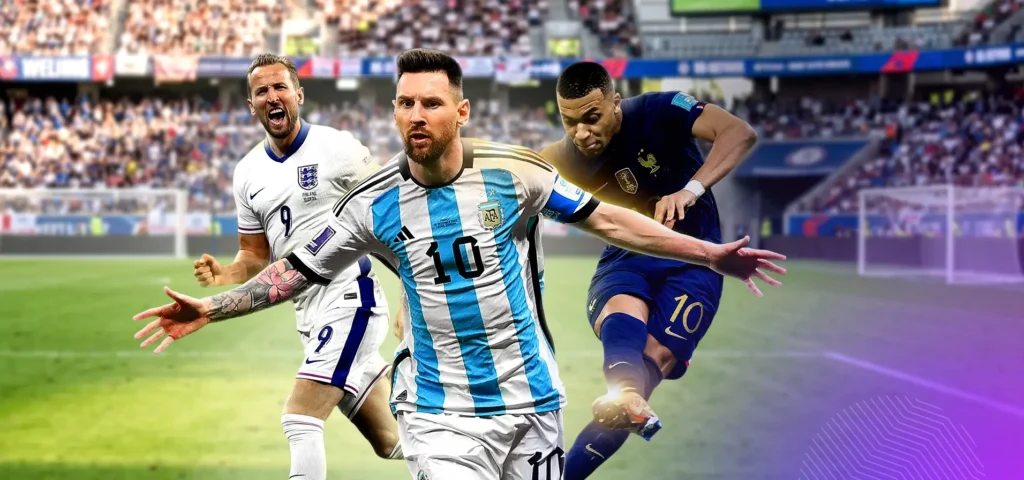
Across the world, broadcasters, telecom operators and streaming services mixed subscriptions, advertising, free-to-air coverage, and digital distribution in different ways to maximize revenue. The era of choosing one monetization model is over.
Today’s media companies need to run multiple business models simultaneously.
The challenge is no longer deciding between SVOD, AVOD, FAST, pay-per-view, or bundled subscriptions. It’s building the infrastructure that can support all of them – without creating operational complexity.
Using FIFA’s official broadcast rights data, we mapped how every territory approached monetization. The results reveal where the future of streaming monetization, subscription billing, and media revenue orchestration is heading.
One Tournament – Multiple Revenue Models
If one event perfectly illustrates how fragmented media monetization has become, it’s the 2026 FIFA World Cup.
- In the United States, Fox invested approximately $485 million for the English-language rights, while
- NBCUniversal’s Telemundo reportedly paid around $600 million for the Spanish-language package. Both relied heavily on subscription-based access to recover those investments.
- Brazil took a completely different approach. Rather than placing matches behind a paywall, CazeTV streamed every game free on YouTube, while Globo complemented that with free-to-air television coverage.
One of football’s biggest markets proved that advertising-supported and creator-led distribution can coexist with traditional broadcasting.
Other countries combined both approaches.
- In the UK, BBC and ITV shared free-to-air rights while streaming platforms extended viewing through on-demand experiences.
- In Malaysia, Telekom Malaysia’s Unifi TV carried every match on its paid platform, while national broadcaster RTM made most games available free-to-air.
The takeaway is clear: hybrid monetization has become the default operating model.
Instead of choosing between subscriptions or advertising, operators are combining SVOD, AVOD, FAST channels, transactional events and bundled offerings to serve different audiences with different willingness to pay.
That flexibility creates new revenue opportunities – but it also creates operational complexity.
Every pricing model brings its own billing rules. Every subscription tier has different entitlements. Every advertising model introduces its own reporting and reconciliation requirements. Managing all of that across millions of subscribers quickly becomes difficult if monetization systems weren’t designed to support multiple commercial models from the outset.
This is exactly where the Evergent Monetization Platform fits. Rather than treating subscriptions, advertising, promotions and partner ecosystems as separate workflows, it enables operators to manage them through a single monetization and entitlement platform – helping global brands such as the NBA (League Pass), BritBox, and aha scale diverse business models without multiplying operational complexity.
Live Sports Didn’t Just Drive Streaming – They Drove the Business
One of the biggest shifts revealed by the 2026 FIFA World Cup wasn’t who won the broadcast rights – it was how audiences watched.
For years, streaming complemented traditional television. During this World Cup, it became the primary destination for millions of viewers.
- In the United States, Fox One added an estimated 2.8 million subscribers in June 2026, making it the platform’s strongest acquisition month since launch, according to Antenna.
- In Brazil, CazeTV built its entire World Cup experience on YouTube. In China, mobile viewing happened through Migu, China Mobile’s streaming platform.
These aren’t isolated examples. They point to a much larger industry shift. Streaming is no longer supporting sports broadcasting – it’s driving it.
That matters because live sports remain one of the few content categories capable of attracting millions of subscribers almost overnight. Research projects the US OTT market will grow from over $60 billion in 2024 to more than $110 billion by 2029, with live sports continuing to be one of its biggest growth engines.
But subscriber growth is only half the story. The real challenge begins when the final whistle blows.
Subscriber Growth Is Easy – Retention Is the Real Test
Every operator that carried the World Cup experienced a surge in subscribers. The harder question is what happens the next day.
Most viewers subscribed for one reason: the tournament. Once it’s over, that motivation disappears almost instantly. For operators, the post-event period can quickly become a churn cliff. The data supports it.
Following the 2026 Winter Olympics, Peacock’s post-event churn reached around 9%, compared with its typical baseline of 5–6%, according to Forbes.
Across the streaming industry, average monthly churn remains around 6.3%, while viewers who engage with content within their first 72 hours are twice as likely to remain subscribers. Many streaming services try to bridge that gap with new programming.
Bundling has also proven effective.
- According to Antenna, Disney+, Hulu and Max retained nearly 80% of bundled subscribers after three months
- Fox is expected to rely on NFL programming to help retain viewers acquired during the World Cup.
These are valuable strategies – but they’re still reactive. They assume every subscriber behaves the same way.
In reality, not every viewer is equally likely to cancel, and not every subscriber needs the same offer to stay.
That’s where AI-driven subscriber intelligence becomes a competitive advantage.
Instead of waiting for cancellations to happen, operators can identify which subscribers are most at risk and intervene before they leave – whether through a personalised retention offer, a plan recommendation, a targeted promotion or an engagement campaign.
This is the approach behind Evergent Captivate, which uses explainable AI to predict churn with 94% accuracy across more than 23 million subscriber records. More importantly, it connects those predictions directly to subscriber lifecycle workflows, allowing operators to take action while there’s still time to influence the outcome rather than after revenue has already been lost.
For broadcasters that acquired millions of subscribers during a global event like the World Cup, even a small improvement in post-event retention can translate into millions of dollars in recurring revenue.
The biggest opportunity isn’t attracting subscribers during a sporting event. It’s giving them a reason to stay long after it’s over.
The Next Streaming Giants May Not Be Broadcasters – They May Be Telcos
One of the most important trends to emerge from the 2026 FIFA World Cup had little to do with broadcasting itself. Telecom operators are no longer just distributing content – they’re becoming media companies.
Across multiple markets, telcos secured premium sports rights, launched streaming services, and bundled live content with mobile and broadband plans.
- In Germany, Deutsche Telekom became the primary rights holder, streaming all 104 matches through MagentaTV while making selected games available through public broadcasters.
- In Malaysia, Telekom Malaysia’s Unifi TV secured the rights ahead of traditional pay-TV providers. Similar partnerships appeared across Indonesia, Hong Kong and other markets, highlighting a much broader shift in content distribution.
For consumers, this is a better experience. One provider. One subscription. One bill.
For operators, however, it introduces an entirely new level of complexity.
Bundles Are Easy to Sell – They’re Much Harder to Bill
Today’s subscription bundles combine very different services.
A customer might pay one monthly bill that includes:
- Mobile connectivity
- Home broadband
- Streaming subscriptions
- Premium live sports
- Partner entertainment services
Behind that single payment are multiple pricing models, different entitlement rules, and several content partners that all need their share of the revenue.
Traditional OTT billing systems weren’t designed for this.
They can manage a streaming subscription. They struggle when that subscription becomes part of a broader ecosystem involving telecom services, third-party partners, usage-based charging and revenue sharing.
That’s why convergent billing has become a strategic capability – not just an operational one.
Modern Monetization Requires Modern Revenue Infrastructure
The challenge doesn’t stop with billing the subscriber.
When a telecom bundles sports, entertainment and connectivity into a single offer, the revenue collected from that one subscription often needs to be allocated across broadcasters, streaming platforms, content owners and distribution partners – each operating under different commercial agreements, currencies and settlement rules.
Managing that manually doesn’t scale.
Operators increasingly need a monetization platform that can handle subscriptions, usage-based services, partner settlements and entitlement management within a single system.
That’s where Evergent’s Convergent Usage Charging and Rating and Partner Management capabilities come in. They enable operators to manage multiple services, automate partner settlements and support complex bundling models through a unified billing and monetization platform. As companies expand beyond standalone streaming into ecosystems of subscriptions, connectivity and partner services, billing is no longer a back-office process.
It’s the foundation that enables new business models.
What the 2026 FIFA World Cup Means for Media Companies
The 2026 FIFA World Cup wasn’t just a global sporting event – it was a glimpse into the future of media monetization.
Across more than 220 territories, broadcasters, streaming platforms and telecom operators experimented with different ways to package, distribute and monetize the same content. There was no single winning strategy. Instead, three clear lessons emerged that will shape the next generation of media businesses.
1. There Is No Longer a Single Monetization Model
The days of choosing between subscriptions or advertising are over.
Today’s operators are combining SVOD, AVOD, FAST, transactional events, telco bundles and partner offerings to serve different audiences with different price sensitivities.
The World Cup made one thing clear: success isn’t about finding the perfect business model. It’s about having the flexibility to launch, test and evolve multiple commercial models as audience behaviour changes.
Operators that rely on rigid billing systems will struggle to keep pace. Those with flexible monetization infrastructure will be able to adapt faster, experiment more often and unlock new revenue opportunities.
2. Subscriber Acquisition Is Only the Beginning
Live sports remain one of the most effective ways to attract subscribers.
Keeping them is where long-term value is created.
Event-driven audiences behave differently from long-term subscribers. They join quickly, engage intensely and often leave just as fast. The operators that succeed won’t simply launch another content promotion after the event ends – they’ll use AI and subscriber intelligence to understand who is likely to leave, why they’re leaving and what intervention is most likely to retain them.
Retention is no longer just a marketing objective.
It’s becoming a core monetization strategy.
3. Billing Has Become a Competitive Advantage
As streaming bundles become more sophisticated and telecom operators play a larger role in content distribution, billing is no longer a back-office function.
It’s the infrastructure that enables new business models.
Whether it’s launching a sports bundle, introducing dynamic pricing, settling revenue across partners, or managing subscriptions across multiple services, operators need platforms that can adapt as quickly as the market changes.
In an industry where products, partnerships and pricing are constantly evolving, the ability to launch and scale new commercial models has become a competitive differentiator.
The Future of Media Monetization Is Orchestrated
The biggest lesson from the 2026 FIFA World Cup isn’t about football. It’s about flexibility.
Every market monetized the tournament differently because every audience behaves differently. Some viewers are willing to pay for exclusive access. Others prefer advertising-supported experiences. Increasingly, many move between both depending on the content, the price and the moment.
That shift demands more than a modern billing system. It requires a monetization platform that can orchestrate subscriptions, advertising, bundling, payments, partner settlements and subscriber lifecycle management as a single, connected ecosystem.
That’s the challenge Evergent was built to solve.
Today, the Evergent Monetization Platform powers subscription and revenue operations across 180+ countries, supporting more than one billion users and processing over $8 billion in annual subscription revenue for leading media, sports and telecom providers.
The World Cup lasted just one month.
The shift it revealed will define the next decade of media monetization.
Frequently Asked Questions
How do broadcasters monetize the FIFA World Cup?
Broadcasters use a mix of subscription services (SVOD), advertising-supported viewing (AVOD), free-to-air television and hybrid models. As the 2026 FIFA World Cup demonstrated, different markets adopted different approaches based on audience behaviour, commercial objectives and local market dynamics.
What is hybrid monetization?
Hybrid monetization combines multiple revenue models – such as subscriptions, advertising, FAST channels and pay-per-view – within a single platform or service. This gives operators greater flexibility to serve different audience segments while maximizing revenue.
Why is churn such a challenge after live sporting events?
Major sporting events drive large subscriber spikes, but many viewers subscribe only for the tournament. Without effective retention strategies, operators can experience significantly higher churn once the event ends. AI-powered churn prediction, personalized offers, bundling and subscriber lifecycle management help reduce post-event cancellations.