A Complete Guide on Merchant of Record (MOR) for OTT & Streaming
Global streaming expansion looks like a distribution problem. It is really a tax and compliance problem wearing a distribution costume.
The moment your subscription button goes live in Manila, Mexico City, or Milan, you trigger legal obligations most product roadmaps don’t account for. You may need to register for VAT in the customer’s country, apply the correct rate, validate location, file returns in the local language, manage chargebacks under local consumer protection laws, and retain transaction records for up to ten years.
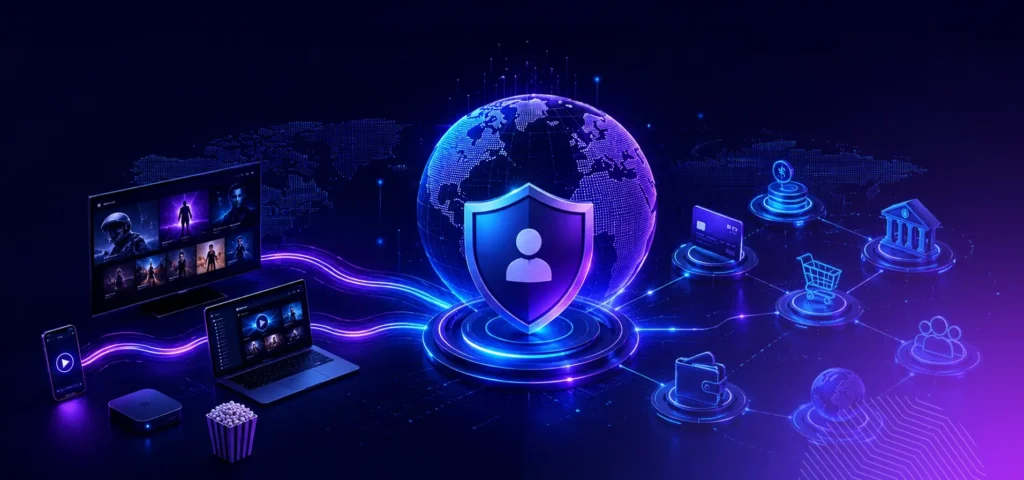
You can build that capability in-house, but it requires years of investment in tax counsel, local entities, and finance operations. Or you can put a Merchant of Record between your platform and the customer.
This guide explains what an MOR is, how it differs from a payment processor, when streaming platforms need one, the three deployment models available, and the country-by-country triggers that can determine the right approach.
What Is a Merchant of Record?
A Merchant of Record is the legal entity that sells your service to the end customer. The transaction is legally between the MOR and the subscriber, not between your streaming platform and the subscriber.
That legal structure transfers several obligations to the MOR:
- Tax collection and remittance: VAT, GST, digital services tax, sales tax, and other local requirements.
- Invoicing: Local language, format, currency, and tax requirements.
- Chargeback handling: Chargeback management and fraud liability.
- Consumer protection compliance: Refund windows, dispute processes, and contract terms.
- Payment method availability: Local cards, wallets, bank transfers, and carrier billing.
- Regulatory registration: Registrations required in each jurisdiction.
Your platform still owns the customer relationship, content, product experience, and pricing. The MOR owns the transaction.
That distinction is the core of the model.
Merchant of Record vs Payment Processor vs Payment Gateway vs Seller of Record
These terms are often used interchangeably, but they serve different roles.
| Role | What it does | What it does not do |
| Payment Gateway | Encrypts and routes card data from checkout to the payment processor. | Does not take on legal, tax, or compliance responsibility. |
| Payment Processor | Moves funds between the customer’s bank and your business. | Does not legally own the transaction or handle tax remittance. |
| Seller of Record (SOR) | Appears on the invoice as the seller. | Does not necessarily handle tax filings across jurisdictions. |
| Merchant of Record (MOR) | Legally sells the product, remits tax, handles chargebacks, and carries regulatory liability. | Does not own your product, content, pricing, or customer relationship. |
A payment processor moves the money. A Merchant of Record owns the transaction and its associated compliance obligations.
If your finance team is still filing VAT returns in six countries, you have a payment processor, not an MOR.
Why Streaming Platforms Specifically Need MOR?
Every SaaS business hitting international markets deals with digital tax. OTT platforms hit it harder, for four reasons:
1. Volume, not size. A B2B SaaS company might have 500 EU customers. A streaming service can have 500,000. Each one triggers a taxable transaction, most of them recurring. The compliance overhead scales with subscriber count, not revenue.
2. Cross-border by default. SaaS often lands one enterprise customer at a time. Streaming lands entire markets in a launch window. The MOR question is not “eventually” — it’s day one.
3. Consumer protection exposure. B2B contracts negotiate refund terms. Consumer subscriptions inherit whatever the local jurisdiction mandates — 14-day cooling-off periods in the EU, mandatory refund rights in parts of LATAM, cancellation rules that vary by country.
4. Content licensing intersects with tax residency. Where you’re licensed to distribute, where the customer is located, and where the transaction is legally recorded all have to line up. Get the third one wrong and the first two get audited.
That is why “MOR” shows up in OTT RFPs far more often than in SaaS RFPs.
The Three MOR Deployment Models
There are three ways to run a Merchant of Record model. The right choice depends on how much control you need, how many markets you are entering, and how much complexity your billing stack can handle.
1. Full MOR
One MOR partner handles every transaction across every market and your entire subscriber base.
Best for: Platforms launching globally on a compressed timeline, lean finance teams, and businesses that want tax and compliance as a fixed cost.
Tradeoffs: The MOR typically takes 3–7% of each transaction, with higher fees possible in regulated markets. You have less direct visibility into tax filings, and switching providers later can require a significant migration.
2. Hybrid MOR
You act as the Merchant of Record in your home market and other markets where you have a local entity. An MOR handles the remaining markets.
Best for: Established platforms expanding into 5–20 new markets that want cost efficiency at home and compliance coverage abroad.
Tradeoffs: Your billing platform must route transactions to different legal entities based on customer location. Reconciliation also becomes more complex, with separate books, audit trails, and compliance workflows.
3. Regional MOR
You use different MOR partners for different regions, such as LATAM, APAC, and the EU. Some markets may require country-specific MORs.
Best for: Mature platforms operating across multiple regions with distinct regional strategies and the operational capacity to manage several partners.
Tradeoffs: Managing multiple vendors adds operational overhead. Fee structures, contract terms, and reporting formats can vary by partner. This model also requires the strongest billing infrastructure.
| Model | Coverage | Fee Impact | Control | Complexity | Ideal For |
| Full MOR | Global, one partner | Highest | Lowest | Lowest | Rapid global launch, lean finance team |
| Hybrid MOR | Home in-house, rest outsourced | Moderate | Moderate | Moderate | Established platform, 5–20 new markets |
| Regional MOR | Multiple partners by region | Variable | Highest | Highest | Mature multi-region platforms |
Regional Triggers: When Geography Forces the MOR Decision
Specific tax and compliance requirements in each market drive the MOR decision. Three regions create the most complexity for streaming platforms.
European Union: OSS, VAT, and Zero Tolerance for Non-EU Sellers
The EU taxes digital services, including streaming, where the customer is located. For non-EU businesses, VAT is due from the first sale. There is no registration threshold if the business is not established in the EU.
For EU-established businesses, an EU-wide €10,000 annual threshold applies to cross-border B2C digital services before Union OSS applies.
Key mechanics streaming platforms need to know:
- One-Stop Shop (OSS): Register in one EU member state and file a single quarterly return covering EU sales instead of registering in 27 countries.
- Non-Union OSS: Lets non-EU sellers, including US, Indian, and Singaporean platforms, register in one EU member state and consolidate reporting.
- Location verification: Requires multiple pieces of evidence, such as IP address, billing address, payment method country, and SIM country code. Relying on a single data point creates compliance risk.
- Record retention: OSS transaction records must be retained for 10 years.
- ViDA (VAT in the Digital Age): Expands OSS through 2028, including mandatory e-invoicing and broader platform responsibilities.
What this means for MOR: Non-EU streaming platforms can benefit from an MOR in the EU. OSS enables self-management, but location verification, record retention, and e-invoicing add operational cost. An MOR handles these requirements while the platform focuses on subscriber growth.
Southeast Asia: Six Regimes, Six Sets of Rules
Southeast Asia is a common tipping point for the MOR decision. Six major markets have six different digital services tax regimes.
| Country | Digital Services Tax | Rate | Registration Threshold |
| Philippines | VAT on digital services (RA 12023, effective June 2025) | 12% | Aggregate gross sales over PHP 3 million |
| Malaysia | Service tax on imported digital services | 8% (from 6% in 2024) | RM 1 million annual revenue from Malaysia |
| Indonesia | VAT on digital services | 11% | Threshold set by MoF appointment |
| Thailand | VAT on foreign digital service providers | 7% | THB 1.8 million annual revenue |
| Singapore | GST on digital services (Overseas Vendor Registration) | 9% | SGD 1 million global turnover + SGD 100k to Singapore |
| Vietnam | VAT + Corporate Income Tax on cross-border digital | 5–10% VAT + 5% CIT | Varies by supplier type |
The Philippines is the newest and most active regime. RA 12023 applies a 12% VAT to digital services from local and foreign providers. Non-resident digital service providers must assess, collect, and remit the tax and cannot claim input tax credits.
What this means for MOR: The six SEA markets use different registration, filing, and remittance rules. Managing all six can become a dedicated compliance function. An MOR can be the more efficient option for platforms entering the region, particularly Tier 2 platforms without regional finance teams.
Latin America: The Highest VAT Rates in the World
LATAM has moved quickly on digital tax. Rates are high, requirements vary, and Brazil’s tax reform will reshape the regional landscape.
| Country | Digital Services Tax | Rate | Notes |
| Mexico | VAT on digital services | 16% | Non-resident platforms must register, collect, and remit monthly; 2026 reform expanded VAT and income tax withholding |
| Chile | VAT on digital services | 19% | Non-resident registration required; withholding tax applies where VAT registration is absent |
| Colombia | VAT on digital services | 19% | Alternative: 10% withholding tax, or 3% income tax on gross revenue for SEP-regime entities |
| Argentina | VAT on digital services | 21% (23% in some jurisdictions) | 31.5% withholding tax on cross-border digital payments; 17.5% reduced rate for certain media |
| Brazil | CBS/IBS (new regime, phased 2026–2033) | ~28% projected | Replaces PIS, Cofins, ICMS, ISS; foreign platforms will register and collect |
| Uruguay | VAT on digital services | 22% | Highest rate in the region |
| Peru | VAT on digital services | 18% | Withholding mechanisms apply |
Argentina adds a 31.5% withholding tax on cross-border payments for digital services on top of VAT, with a reduced 17.5% rate for certain media transmissions.
Brazil represents the biggest structural change. The CBS/IBS system phases in from 2026 through 2033, replacing four existing taxes. Foreign digital service providers will need to register with Brazilian tax authorities and collect the applicable taxes.
What this means for MOR: LATAM presents a strong case for MOR. High tax rates increase the cost of errors, while withholding mechanisms vary by market. Brazil’s reform also creates a moving compliance target through 2033. For many streaming platforms, delegating LATAM compliance to an MOR is simpler than building the function in-house.
When Do You Actually Need a Merchant of Record?
You do not need an MOR in every market. It becomes worth considering when at least two of these conditions apply:
- You operate in five or more countries with different tax regimes.
- You have no local legal entity in the market.
- The market imposes VAT or DST on non-resident digital services. Nearly every major market does.
- Your subscriber volume exceeds the effort required to manage compliance in-house.
- Local consumer protection laws create chargeback or refund exposure beyond your risk appetite.
- You need local payment methods such as Boleto, GCash, DANA, PIX, or PayNow that require local settlement.
If none apply, you likely need a payment processor and a good tax accountant, not an MOR. If three or more apply, an MOR becomes a strategic decision rather than an operational one.
How to Evaluate a Merchant of Record Partner
If an MOR is the right fit, vendor selection matters. Evaluate these five areas:
1. Regional Coverage Depth
Every MOR claims global coverage. Ask where it has local entities, where it uses regional MOR partners, and where it relies on payment aggregators. The deeper the local infrastructure, the stronger the compliance coverage.
2. Payment Method Breadth
In LATAM, PIX and Boleto are essential. In SEA, e-wallets and carrier billing matter. A card-only MOR can limit conversion in the same markets where you need local compliance.
3. Fee Structure Transparency
MOR fees can include a transaction percentage, fixed transaction fee, FX spread, and chargeback fees. Some also charge for tax remittance, invoicing, or reporting. Compare the total effective cost, not just the headline rate.
4. Integration With Your Billing and Entitlement Stack
An MOR should integrate with your existing subscriber management, entitlement, and CRM systems. If it requires a separate subscription database, you risk creating two sources of truth for the same customer.
5. Data Ownership and Exit Terms
Understand what happens if you change providers. Can you take your customer data, payment tokens, and transaction history with you? Some MORs can make migration difficult. Review the exit terms before signing the contract.
How Evergent Approaches Merchant of Record
Evergent does not act as a Merchant of Record. Instead, it makes the MOR decision architecturally neutral.
The Evergent Monetization Platform (EMP) integrates with certified MOR partners across full, hybrid, and regional models. Platforms can route transactions to different MORs based on customer location, product, or business rules without changing their subscriber management, entitlement, or CRM systems.
That matters for three reasons:
One MOR Today, Three Tomorrow
As you enter new markets, you can add MOR partners without re-platforming. Subscriber, entitlement, and CRM systems stay the same. Only transaction routing changes.
One Pricing Model Across Every MOR
Product changes, pricing tests, bundles, and promotions are managed once in EMP and applied across MOR partners. You do not need to rebuild your pricing catalog for each provider.
Unified Reporting Across MORs
Finance gets one consolidated view of subscribers, revenue, tax, and reconciliation, regardless of how many MOR partners sit underneath. Multi-MOR complexity stays within the transaction layer, not the reporting layer.
The result: MOR becomes a market-entry decision, not a technology commitment. You can choose the right MOR for each region without forcing your billing stack to change with it.
Frequently Asked Questions About Merchant of Record
1. Is a Merchant of Record the same as a Payment Service Provider?
No. A Payment Service Provider (PSP) processes transactions on your behalf. A Merchant of Record legally sells the product to the customer and takes on tax, chargeback, and regulatory liability. A PSP does not.
2. Do I need a Merchant of Record if I only sell in one country?
Usually not. If you have a local entity, tax registration, and payment methods in one market, a payment processor and local tax counsel are typically sufficient. An MOR becomes more valuable as you expand across borders.
3. How much does a Merchant of Record cost?
MOR fees typically range from 3% to 7% of transaction value, plus per-transaction fees and FX spreads. Some markets have higher fees because of regulatory complexity. Your total cost depends on payment mix, chargeback rates, and regional distribution.
4. Can I switch Merchants of Record later?
Yes, but the difficulty varies by provider. Before signing, check data portability, payment token migration, and subscriber continuity. A billing platform above the MOR layer, such as Evergent, can make switching easier because subscriber records remain outside the MOR.
5. Which regions require a Merchant of Record most urgently?
Latin America, Southeast Asia, and the European Union are the three regions where an MOR is often most valuable. Each has active digital services tax regimes and complex compliance requirements. LATAM and SEA also have local payment methods that can require local settlement.
6. Does an MOR handle chargebacks?
Yes. Because the MOR is the legal seller, chargebacks typically flow to the MOR rather than your platform. The MOR may charge a fee per chargeback and adjust rates based on your chargeback ratio.
7. Can I use multiple MORs simultaneously?
Yes. This is the regional MOR model. It provides greater regional coverage and negotiating leverage but adds operational complexity. Your billing platform needs to route transactions to different MORs based on defined rules.